A scalable experience built with AI to attract new sellers.
Turning an outdated CMS landing into an adaptable, maintainable product aligned with Mercado Libre’s standards—owning design, visual craft, and implementation end to end.
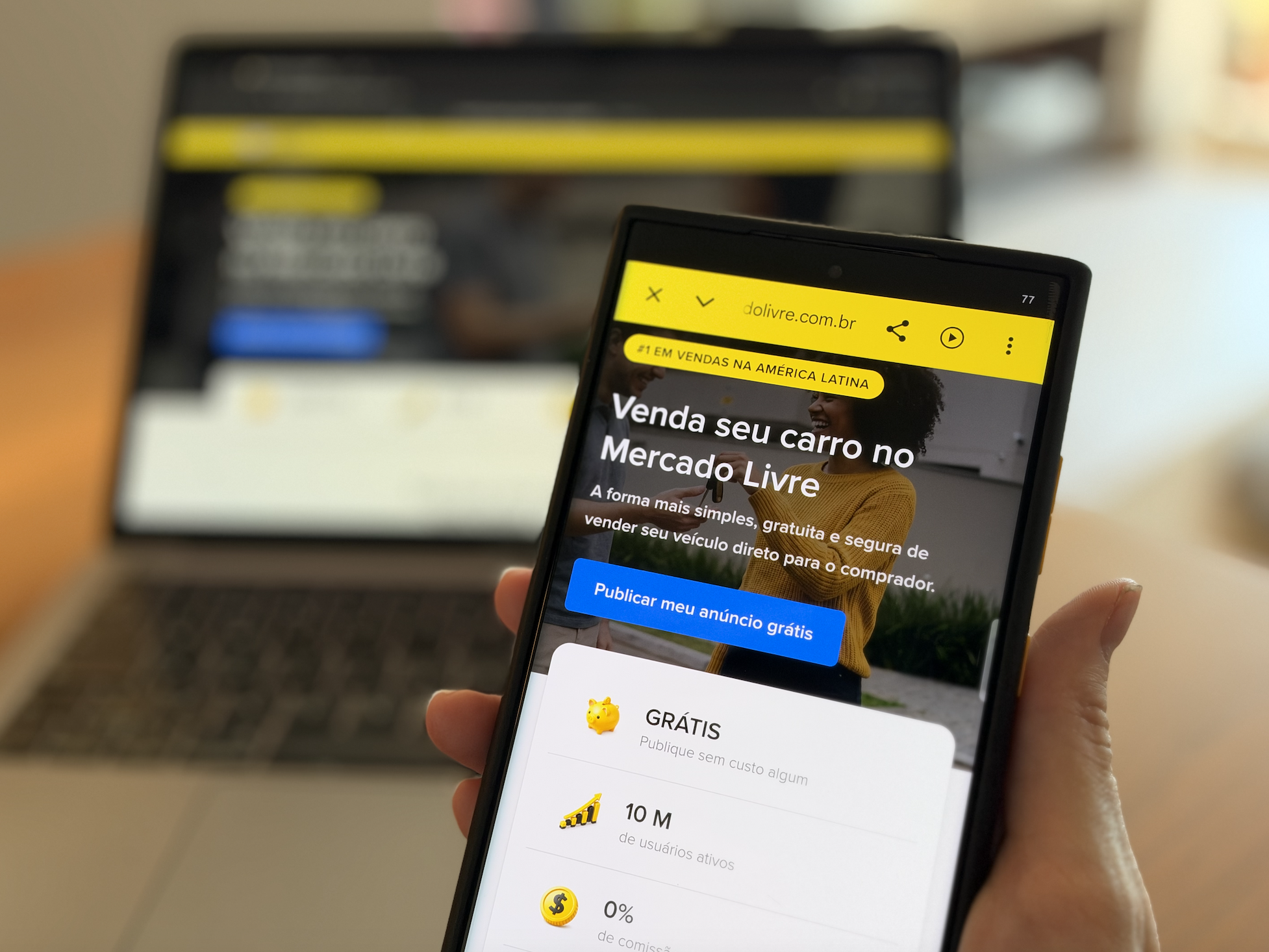
Overview
The original “Sell your car” landing was outdated, did not align with the design system, and depended on a CMS that was being deprecated. I took ownership as an individual contributor from design through implementation, creating a product that could adapt to each business’s needs, stay up to date, and meet Mercado Libre’s quality standards.
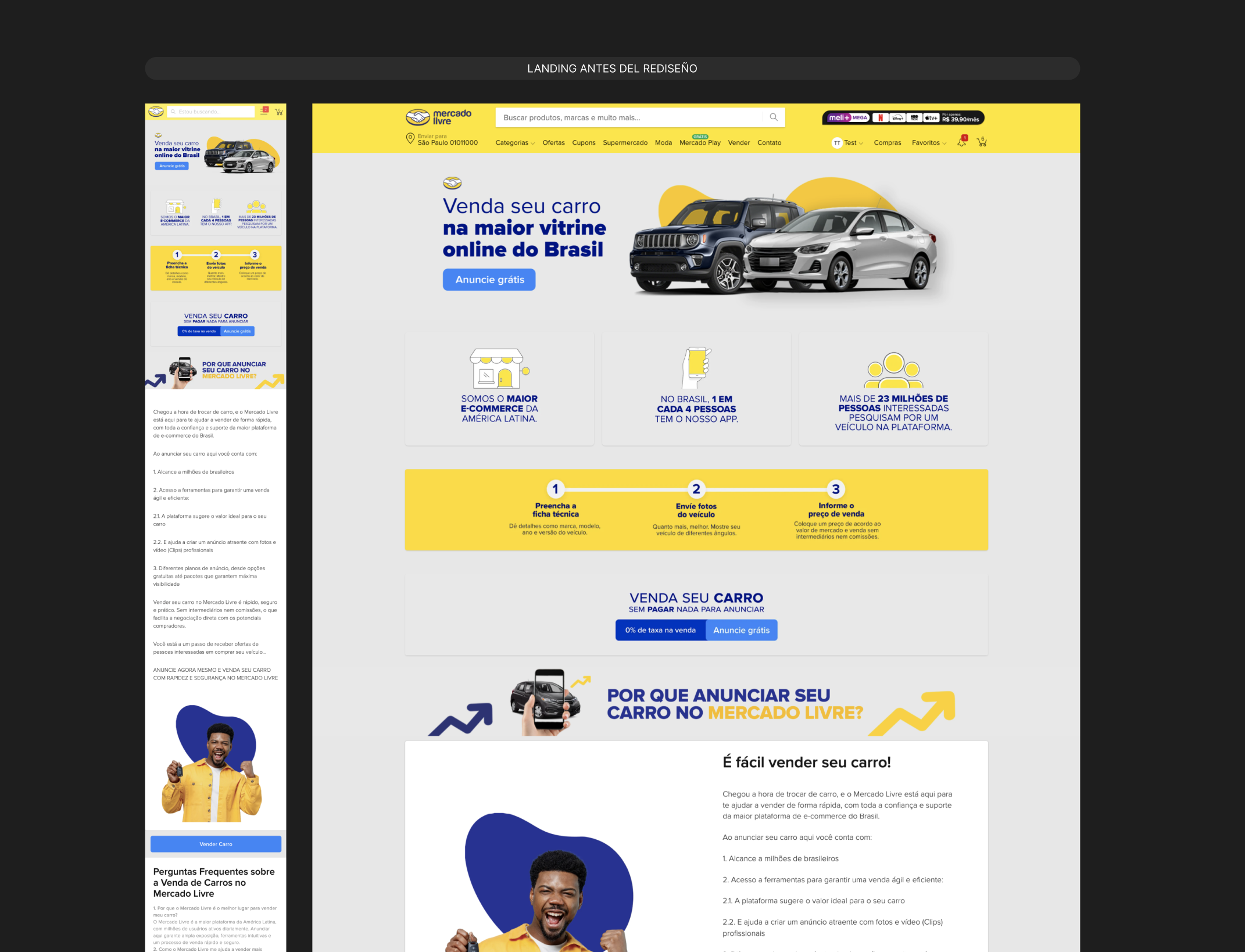
An outdated page. An opportunity to rebuild.
The existing landing had fallen behind the product and the brand. Its design was not aligned with Andes, and the CMS it relied on was being deprecated.
The opportunity was to renew the experience and give the business a landing it could keep evolving: clearer for private sellers, adaptable across markets, and maintainable over time.
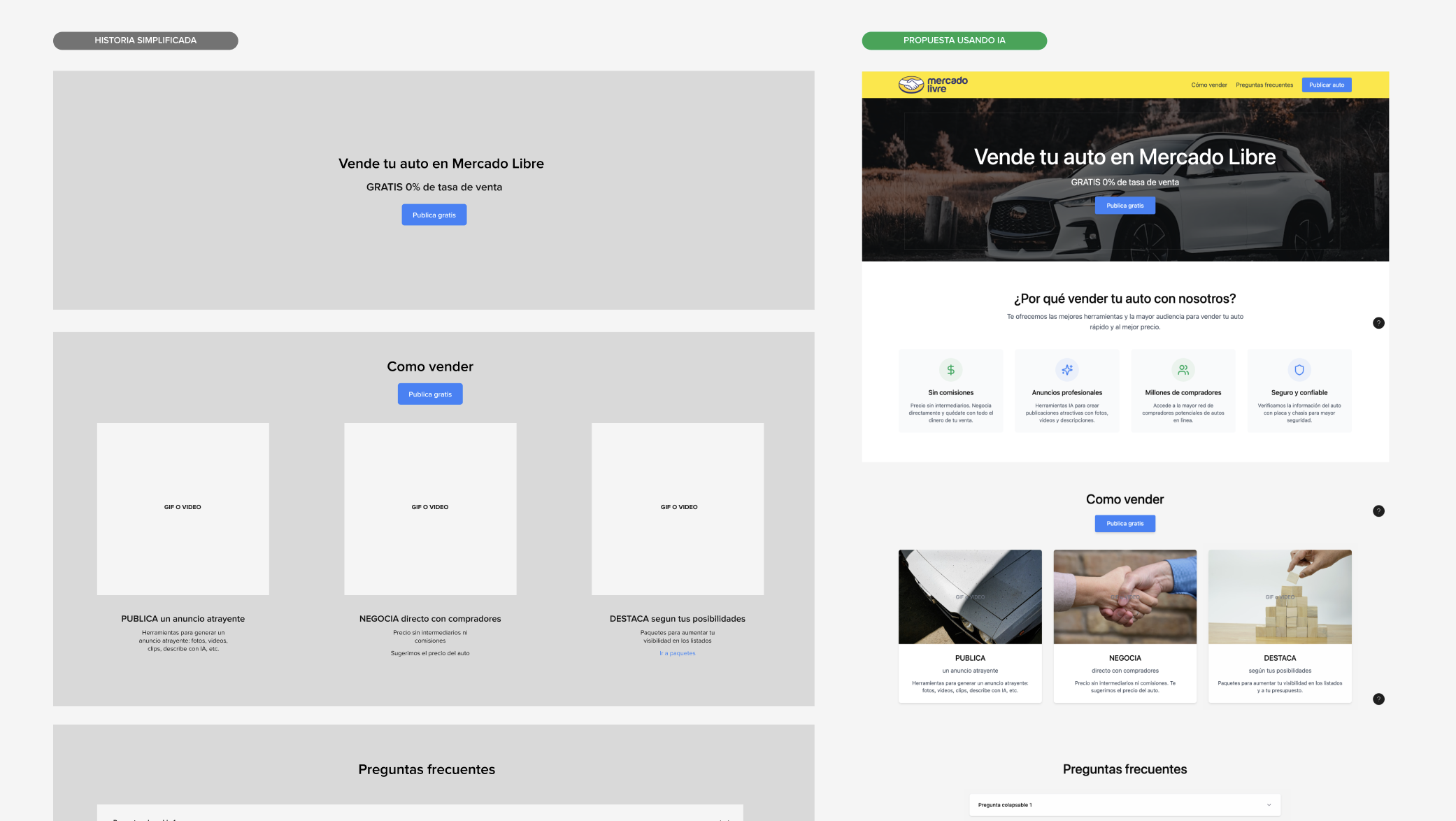
Explore with AI. Refine every detail.
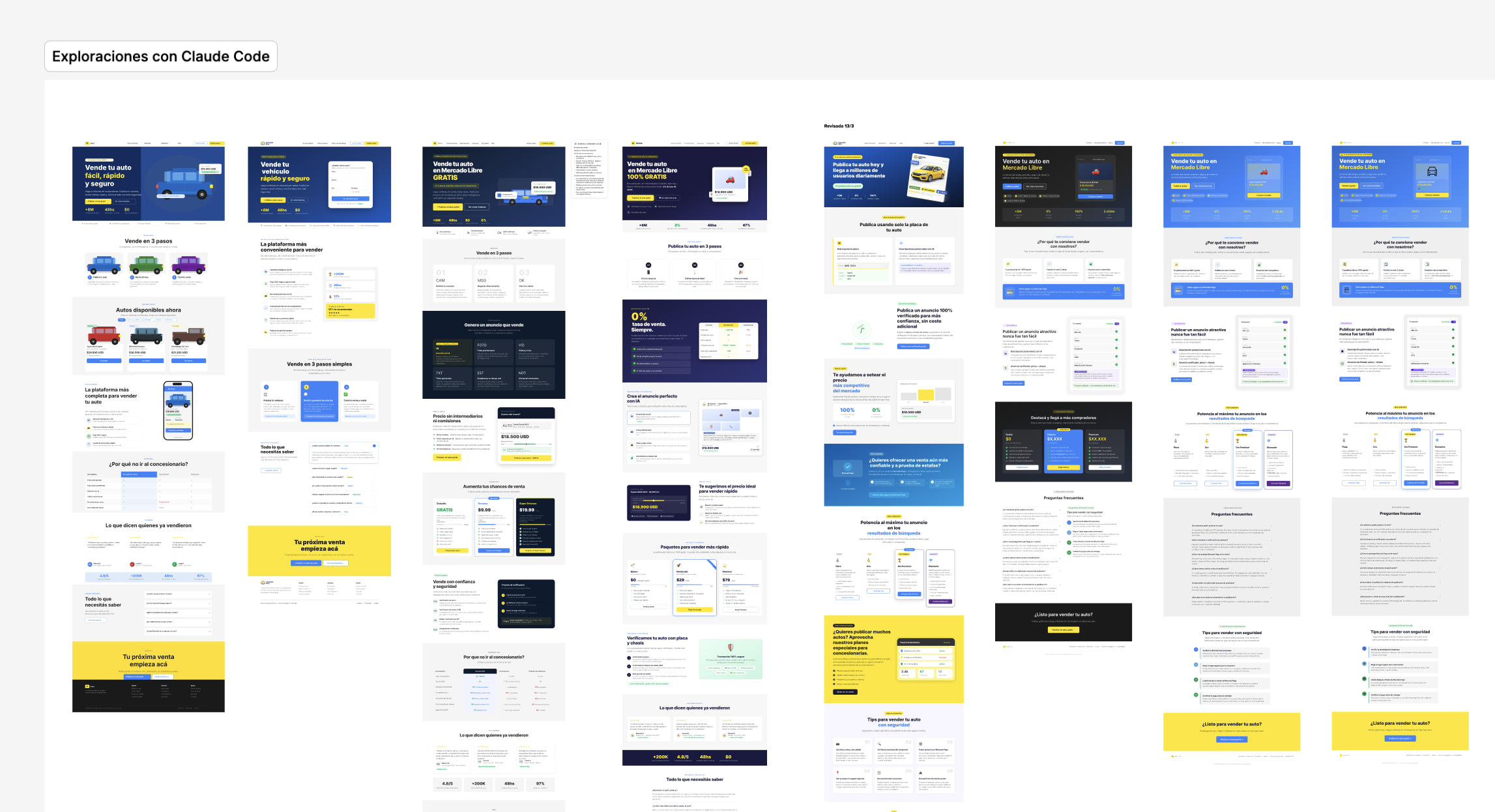
I explored structure and visual directions with Figma Make and Claude Code, then manually refined the design against Andes. The generated proposals gave me material to work with; composition, hierarchy, content, and the final design depended on my judgment.
I also owned the illustration and image-generation work. The AI tools worked with context and patterns from Mercado Libre’s ecosystem, and I refined their proposals with close attention to detail so the visual language belonged to the product.
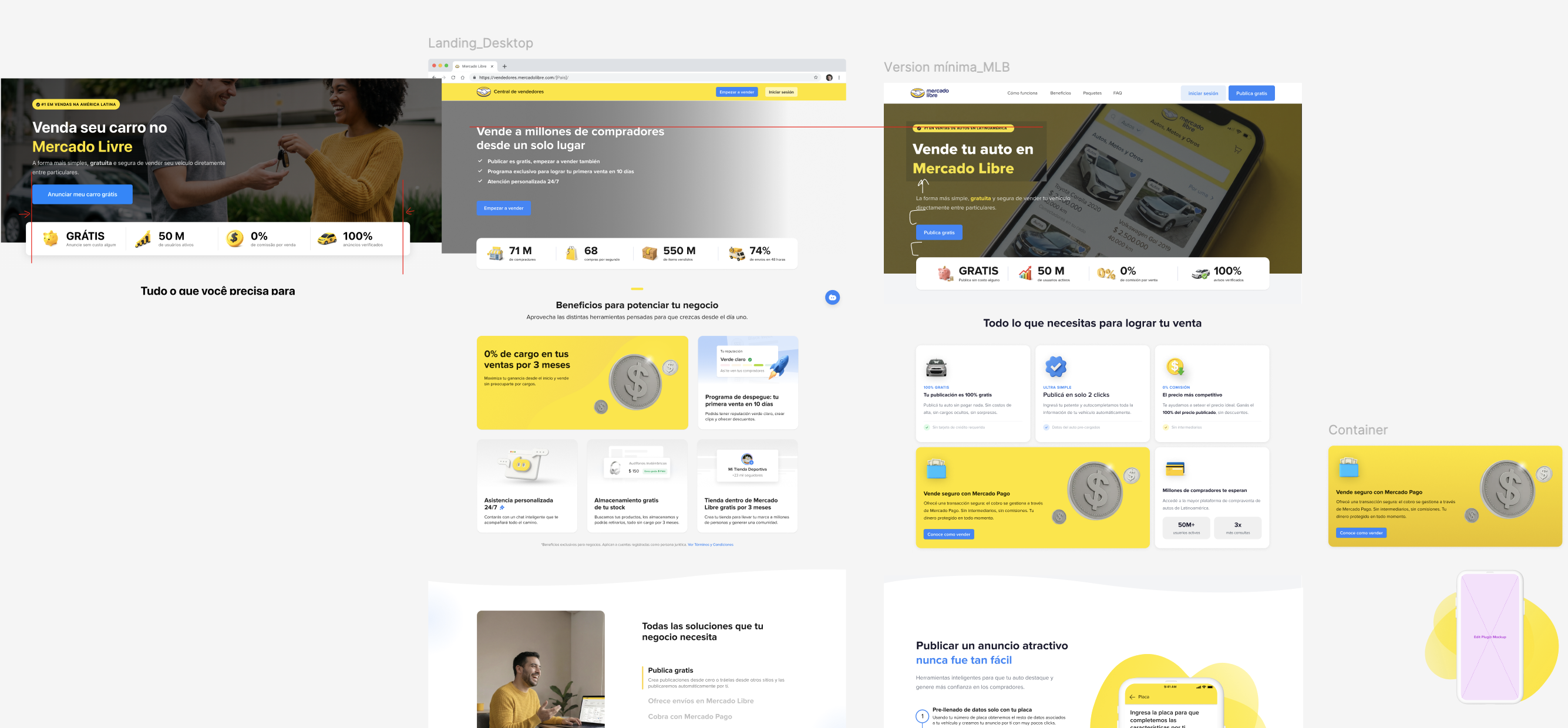
Individual ownership, with the right reviews.
I carried the project end to end: design, content, visual assets, functional and technical specifications, and AI-assisted implementation. I validated design and content decisions with UX and Development managers.
I used spec-driven development to turn the decisions into implementation. Development technical leads validated the code, while engineering supported repository conventions, code review, CI, and release. Working in the production repository proved essential when the first build had to be migrated to Nordic.
Design and content validation
UX and Development managers reviewed the direction and content decisions as I developed the product.
Technical validation
Development technical leads reviewed the implementation against the project’s technical and quality requirements.
Built to adapt. Ready to stay current.
The result was a landing that could be adapted to each business’s needs and maintained as those needs changed. Market-specific content and Spanish/Portuguese localization supported regional variation within a consistent experience.
The renewed page brought the seller proposition, publishing CTA, benefits, product tools, and common questions into a clearer sequence, with the design and implementation validated against Mercado Libre’s standards.
One product, shaped for six markets.
Engineering reviewed the implementation and coordinated the first production release on 9 July 2026. I continued refining country-specific content, localization, and links after launch.
The six regional pages show how the product adapts its language, imagery, and business content while keeping a common design foundation.