Bringing private vehicle sales into Mercado Libre.
Leading the design of on-platform offers and money protection for private vehicle sales, from Brazil’s full transaction flow to an offers-only trial in Mexico.
Overview
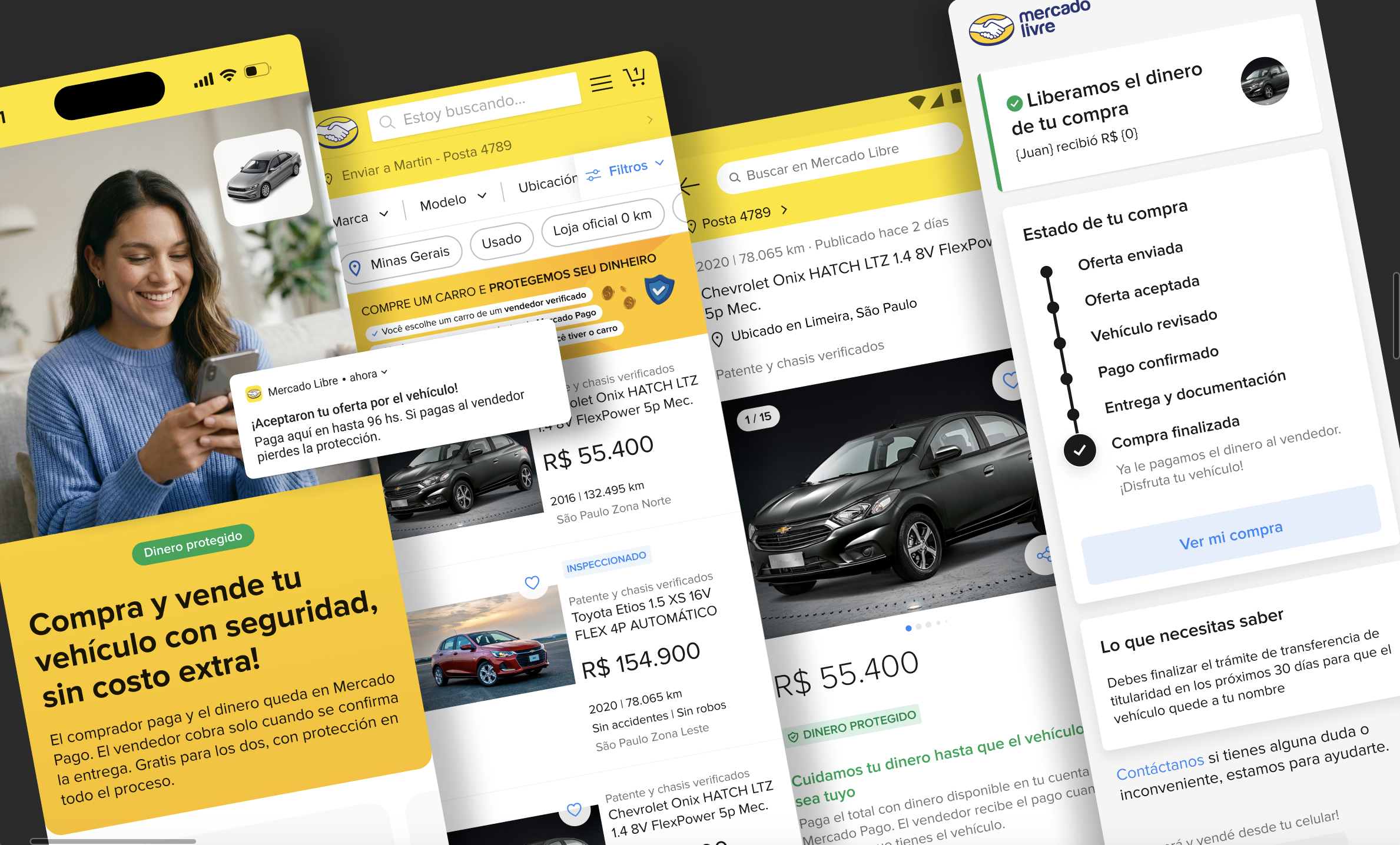
Buying a vehicle from a private seller brings uncertainty, with the risk of fraud affecting both parties. Negotiation and interaction were happening outside Mercado Libre, limiting our visibility into potential sales and problems. We saw an opportunity to bring the transaction into the platform, protect the buyer’s money, and build trust in the vehicle business.
Bring trust and traceability into the purchase.
Uncertainty in private vehicle transactions was a concern in Brazil and Mexico. Although buyers and sellers took their conversations off-platform, the resulting distrust still affected the vehicle business’s NPS and ability to become a preferred place to buy a car.
Product, Experience, and Engineering worked with managers and directors to define how Mercado Libre would intermediate the transaction and what the first MVP could cover. Improving NPS and top-of-mind awareness were goals of that work.
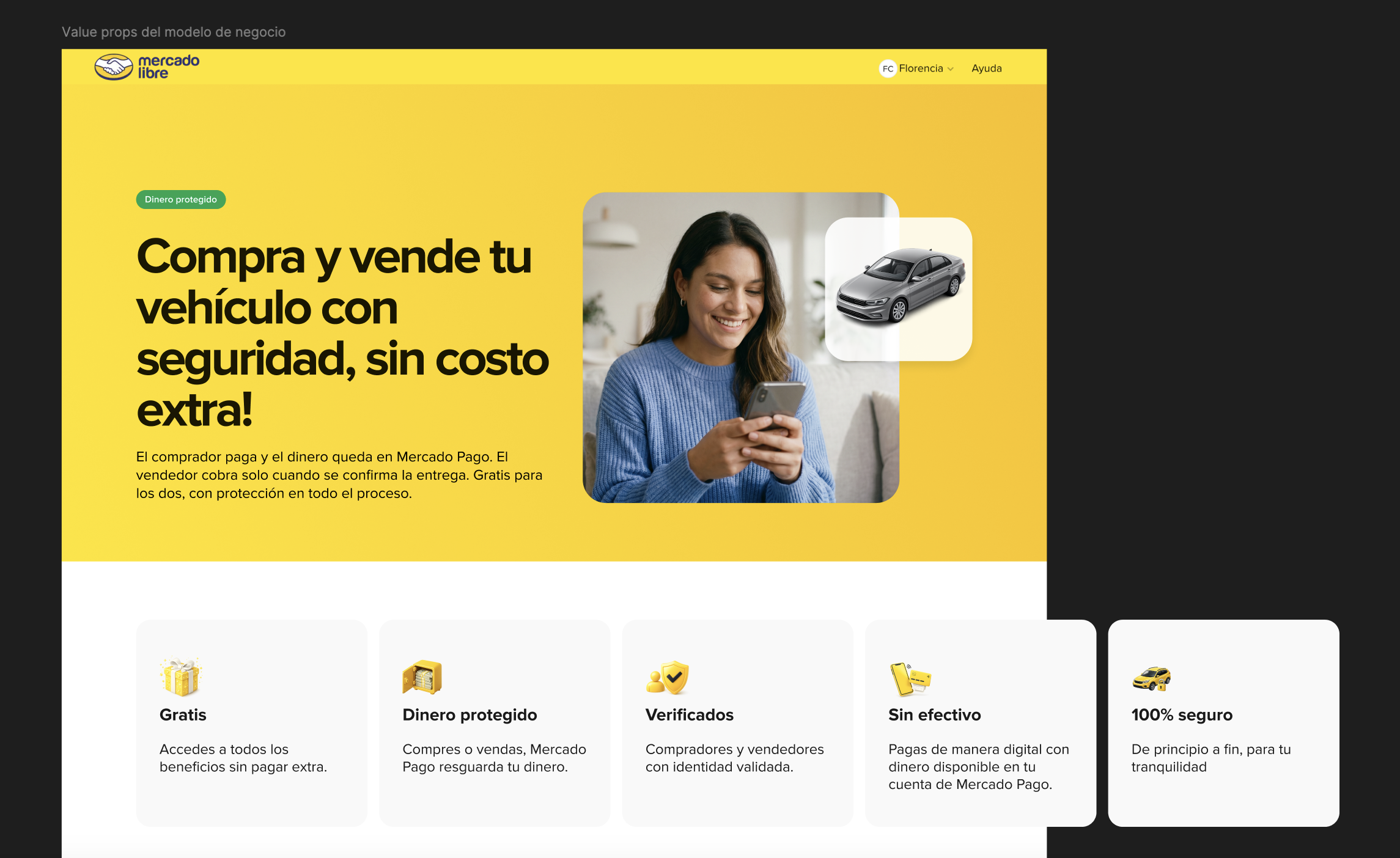
We first aligned on the model’s core value propositions and decided that Mercado Libre’s role as an intermediary would focus on protecting funds throughout the purchase journey. That is how we created the “Dinero Protegido” concept.
An offer, a payment, and two conditions for release.
For Brazil, we designed a journey that kept price negotiation, payment, and the key handover actions inside Mercado Libre. Testing an offer-led model was a Product and Design decision informed by examples from other markets, including Canada.
Make and manage an offer
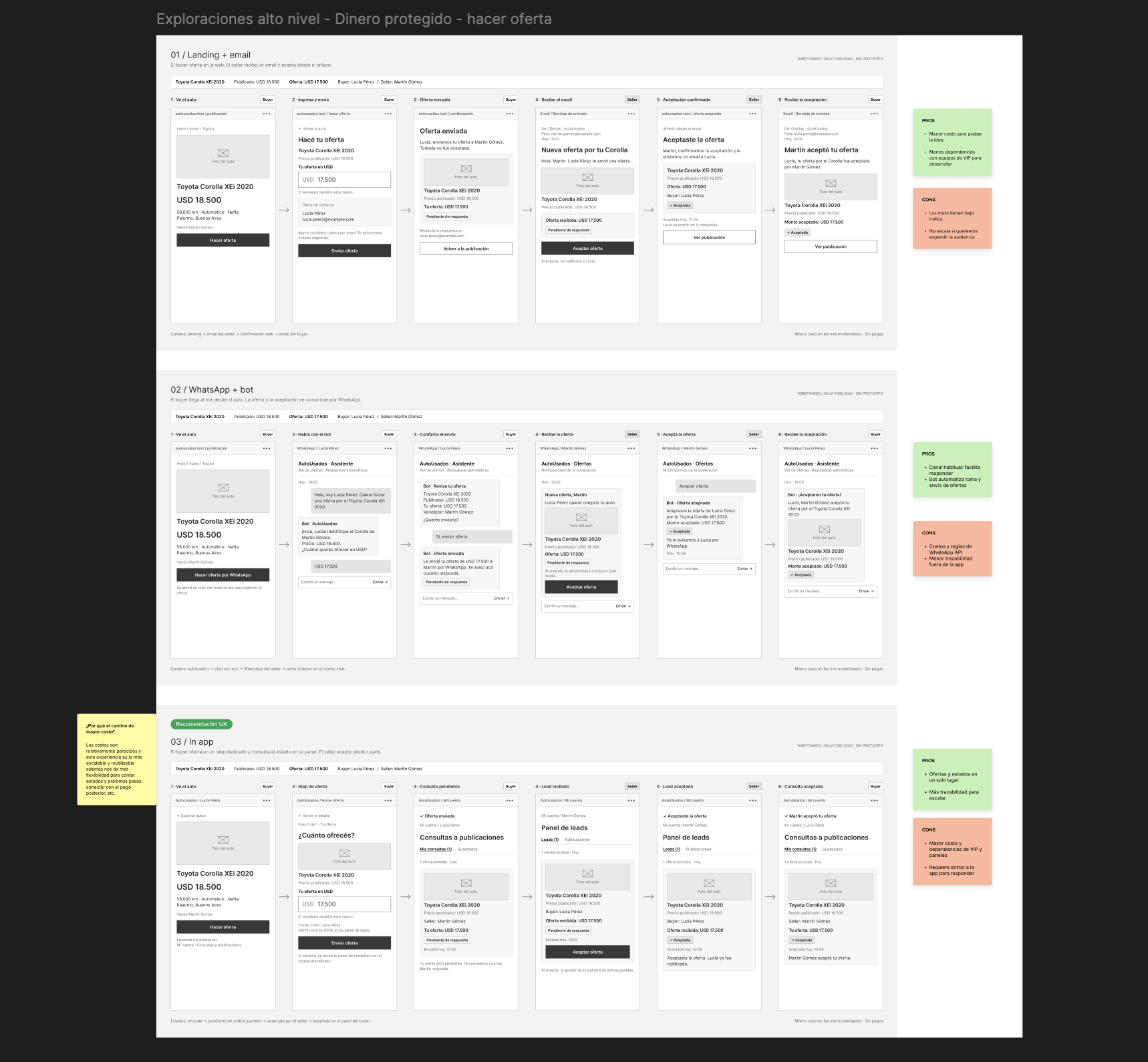
The buyer makes a price offer inside the platform. The seller can accept or reject it, giving the business visibility into potential sales.
Pay through Mercado Libre checkout
The buyer pays using money in their Mercado Pago account. The payment stays within the ecosystem.
Hold the funds during the handover
The seller uploads the vehicle ownership-transfer authorization document, and the buyer confirms receiving the car. Both actions are handled in the platform.
Release the payment after both actions
Funds are released to the seller after the document has been uploaded and the buyer has confirmed receipt of the vehicle.
Familiar patterns, simpler actions, better guidance.
Adapt familiar marketplace patterns
I pushed to reuse recognizable buying and selling patterns. Buyers could make an offer, pay, follow their purchase, and confirm that they had the car in hand.
Give sellers a simple place to manage the sale
Sellers could manage offers from one place in their account, see the transaction stages, and upload the transfer document in the app. The flow still required the buyer’s receipt confirmation before payment release.
Invest in education despite the technical cost
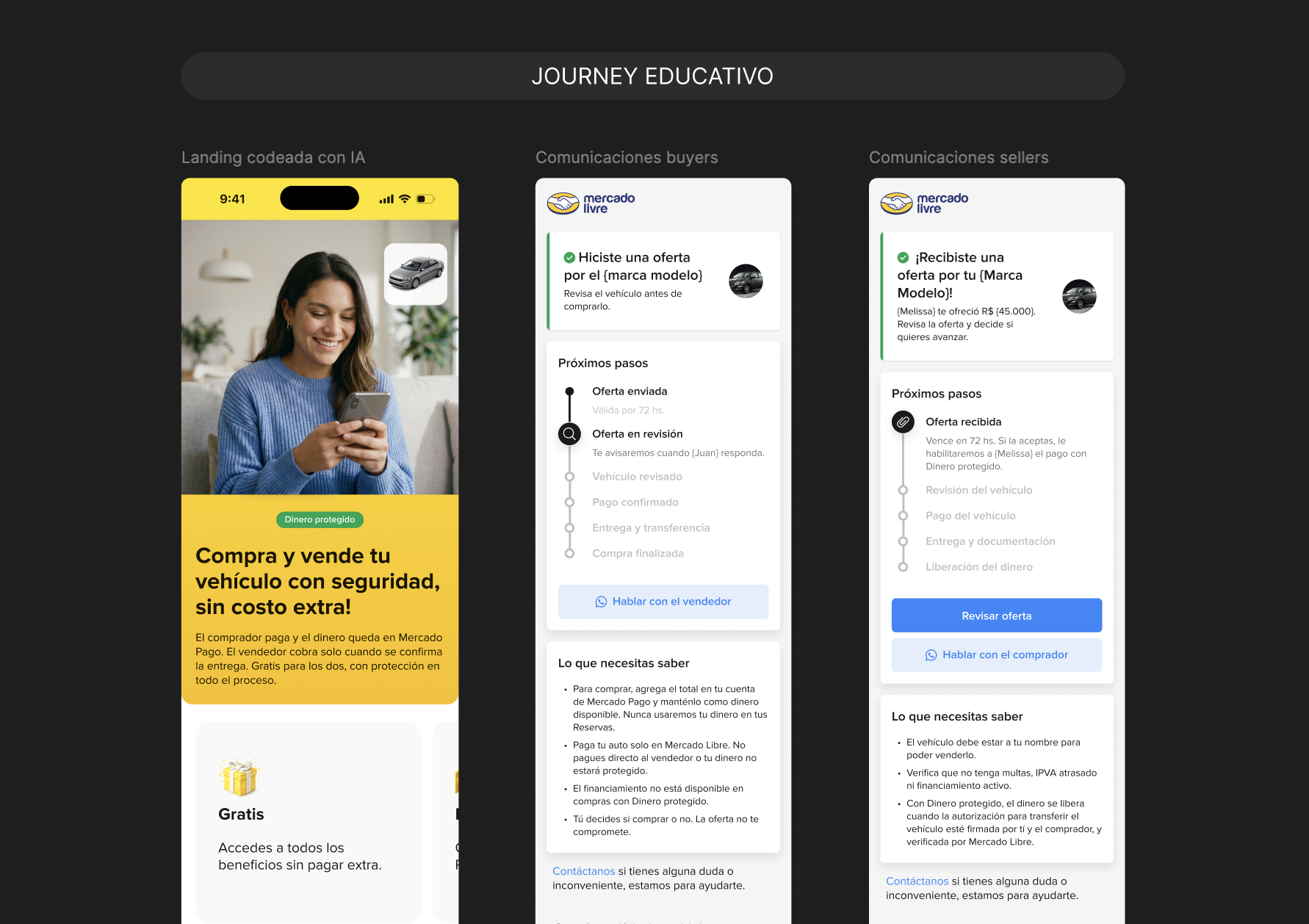
Many buyers could be purchasing their first car. We designed dedicated communications journeys and explanatory landings to guide the vehicle purchase itself, beyond explaining money protection.
Make the decisions clear, then refine together.
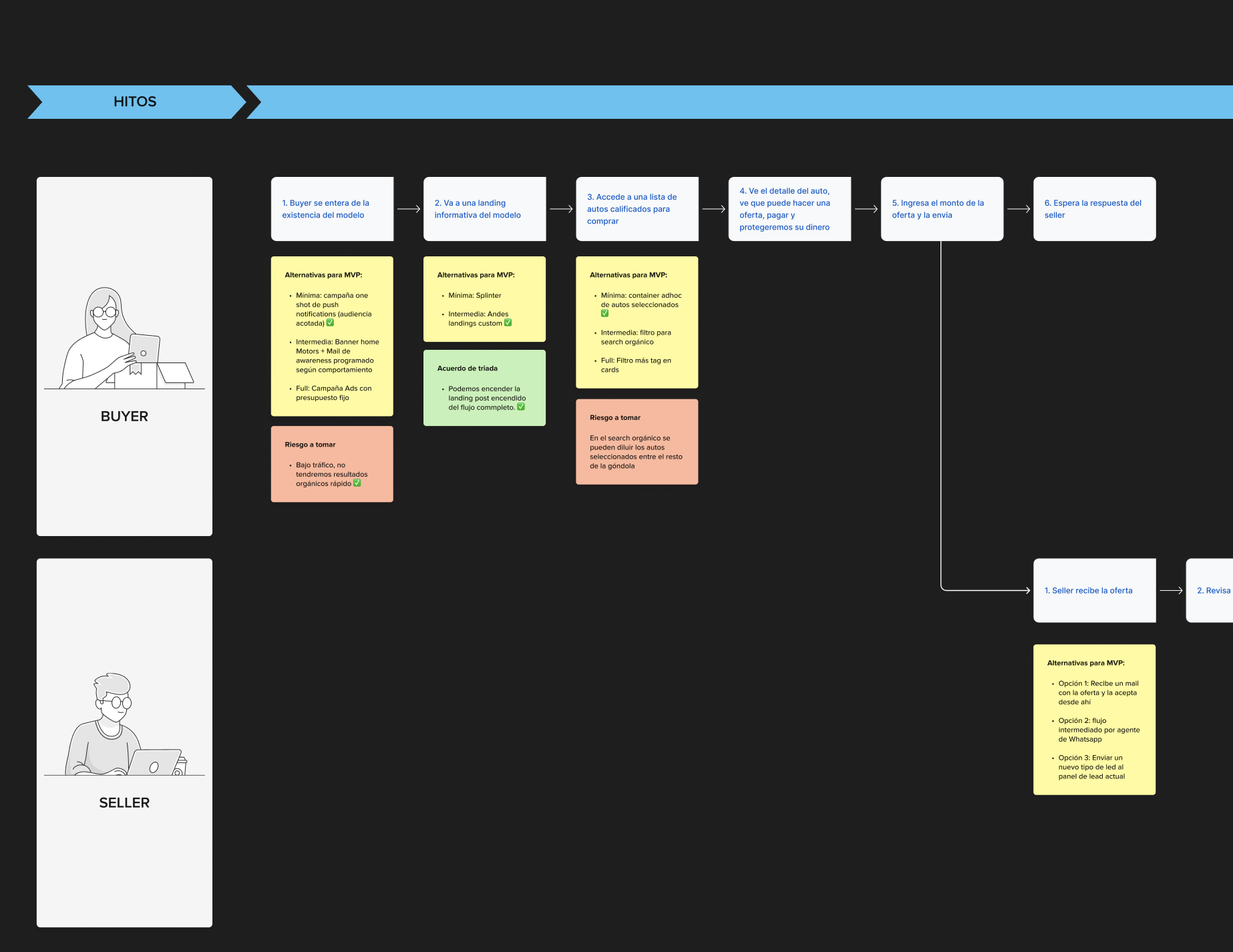
With Product, we combined benchmarking, AI-assisted desk research, and interviews with CX and business teams. We used AI to cross-reference the sources and synthesized taskflows to make the process easier to discuss with stakeholders.
I co-created low- and medium-fidelity alternatives with a Senior Product Designer, using AI to explore paths with different implementation costs. Presenting their pros and cons helped managers reach decisions. A pair of Product Designers then refined the detailed solution across sections of the flow, while AI supported content exploration and refinement.
Complete the first transaction. Reuse the offer model.
The Brazil milestone established that the complete journey could run end to end. Mexico showed how one part of the model could be introduced in another market while keeping the scope focused on offers.
Brazil · Full transaction flow
We enabled a limited seller cohort and completed the first successful sale from beginning to end. The flow reached production and could operate autonomously, creating a foundation for expansion to more users and markets.
Mexico · Offers only
We reused the offer experience for a trial without payment, implemented in less than four weeks. More than 1,000 offers were generated after activation.